

A Reality Check and Reset for Enterprise Digital Transformation

Digital transformation – a process of digital technology being fully integrated into all facets of the business – represents a much more profound change in how organizations function and deliver value to their customers than just the adoption of new tools. Its potential cannot be overestimated, considering how businesses rely on each new digital solution to meet the rapidly changing dynamics of the markets and altering consumer expectations.
In perspective, digital transformation has been on the agenda of enterprises all over the world. According to Flexera, DX now ranks among the top three IT initiatives, second only to cybersecurity at 76% and cloud at 75%. IDC estimates that spending on global DX will reach close to $4 trillion by 2027, with a CAGR of 16.2% during the period from 2022 to 2027. In fact, the investments are further being fanned by the rise of AI and Generative AI as businesses seek to leverage advanced technologies for better efficiency, innovation, and customer experiences.
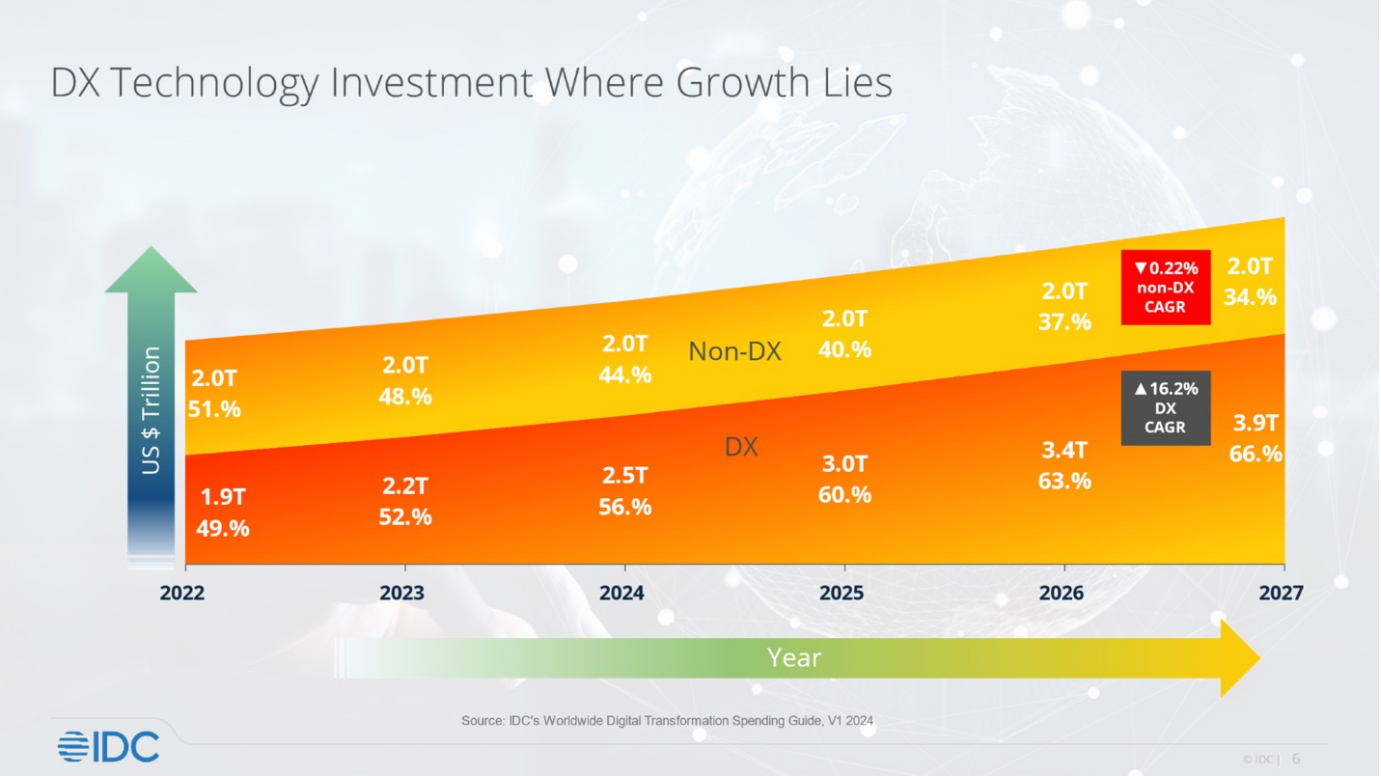
Credit: IDC
In this post, we take a reality check on where digital transformation stands in enterprises today. We go into the promises that have yet to be fulfilled, the tangible impacts that already have been delivered, and what changes are likely to shape the landscape of DX in the next twelve months. Through understanding these dynamics, business leaders can better navigate the complexities of DX and position their organizations for success in the digital age.
Unfulfilled Promises: Where Digital Transformation Fell Short
Overemphasis on Technology, Not People and Processes
Most organizations have shown more emphasis on technology rather than trying to align workflows, drive innovation, or upskill employees. This tech-first approach has led to poorly utilized systems, and frustrated teams with solutions failing to solve the real needs or integration into existing processes.
Inadequate Resources and Budgeting
Financial challenges have been a big obstacle where 50% of U.S. and 39% of European executives named budget-related issues as the key barrier to leveraging big data & analytics profitably for their digital transformation. Many times, lack of adequate funding results in compromises that again render the initiatives non-scalable or not able to deliver expected value.
Ineffective Leadership
A survey by Veeam Software showed that 20% of their respondents believed their leadership was unsupportive or even unclear about digital transformation. Without strong leadership to drive vision and commitment, teams struggled to prioritize, align, and overcome resistance to change.
Fragmentation of Initiatives
Siloed mindsets and behaviors, as reported by 32% of the respondents in a TEKsystems report, have prevented further progress. Disjointed strategies resulted in fragmented systems that have failed to provide cohesive customer experiences or operational efficiencies.
Technology Debt
Technical debt—unresolved technology issues that accumulate over time—at 40% of IT budgets, is draining resources and delaying innovation. Companies also spend an additional 10-20% of project costs to address outdated systems, diverting funds away from transformation efforts.
Delivered Impact: Wins and Success Stories
Improved Customer Experience
Digital transformation enabled new ways in which customer experience and satisfaction are defined for businesses. An excellent example is Adobe’s move from B2B sales of licenses for its software to cloud subscriptions. Though perceived as highly unlikely to succeed by many people, it allowed customers to use their arsenal of offerings from any location and using any device. This not only eased usability but furthered the cause of loyalty among its customers, reinforcing the reward that comes from adapting to evolving user needs.
Operational Efficiencies
Other major wins for the digital transformation of enterprises have come in the form of operational efficiencies. Goldman Sachs did this with “Marcus,” its digital banking platform. In putting much of its financial services online, the company was able to collect and analyze customer data more efficiently. This helped them gain insight into customer behaviors, spot market trends, and develop customized financial products to better serve them and make their operations agile.
Data-Driven Decision Making
The power of data-driven strategies is a clear factor in companies like Netflix. It leverages advanced AI algorithms that study data generated on the platform to discover consumer behaviors and preferences that will enable highly personalized recommendations. Such a strategy ensures early identification of trends and quick adaption to changes, giving the company a unique competitive advantage in the fast-paced entertainment industry and making customers happy with highly personalized recommendations.
Better Cybersecurity, Reduced Attacks
Digital transformation has also improved security, thus building trust between businesses and their customers. A great example of this is how Airbnb has ensured safe transactions through its secure payment systems for both hosts and guests. With such a strong focus on cybersecurity, not only does Airbnb minimize risks, but it also strengthens the overall user experience, further cementing its position as a trusted leader within the travel and hospitality space.
Scalability, Agility, and Future-Proofing
The adoption of newer, cloud-based infrastructures has finally allowed organizations to seamlessly scale and adapt to dynamic market conditions. Equipped with flexible systems, today’s businesses can launch new services quickly, pivot during disruptions, and future-proof their operations with ease. It is this adaptability that keeps them competitive and resilient in the dynamics of constant change in business.
Looking Ahead: Digital Transformation in the Next 12 Months
Generative AI Will Lead the Way
Generative AI will be a driving force in enterprise innovation and efficiency. According to Gartner:
- By 2027, over 50% of the Gen AI models will be industry or business-function-specific, from less than 1% in 2023.
- Over 50% of the development asset selections from tech marketplaces will involve Gen AI orchestration by 2027.
- By 2028, one-third of all interactions with Gen AI services will be based on autonomous agents executing tasks.
- Sustainability will force 30% of Gen AI deployments to utilize energy-efficient approaches by 2028.
Composable Enterprises Are the Future
Composable enterprises, built on modular and flexible tech stacks, are becoming the standard for adaptability. Gartner, who introduced the term, defines composability as “architecting your business for real-time adaptability and resilience in the face of uncertainty.” Similarly, SAP’s Jürgen Müller highlights composable businesses as being “agile and open to change and disruption.” This approach ensures enterprises are equipped to quickly adapt to market shifts, innovate, and thrive in uncertain environments.
Collaboration Will Drive Innovation
The collaboration between enterprises and startups or vendors will continue to increase as companies seek innovation and agility. Such partnerships act as a catalyst for the co-creation of solutions, access to state-of-the-art technologies, and acceleration of digital initiatives in industries where rapid adaptation to changing circumstances is important to remain competitive.
Resilience Will Be a Top Priority
With the projection of cybercrime costs reaching $10.5 trillion annually by 2025, resilience will be foremost. Enterprises are very likely to invest heavily in cybersecurity and risk management, with spending on information security growing 14.3% to reach $215 billion by the end of 2024. This shift in emphasis will be toward proactive defense mechanisms to protect against evolving threats.
Employees Will Be at the Center
Organizations will also continue to put more focus on employee satisfaction and productivity, improving the tools and workflows that support them. Companies with strong employee training programs generate 218% higher income per employee, and 86% of hiring managers say that training is a key factor in employee retention. Workers are looking for growth opportunities, and ongoing training will be one of the mainstays in attracting and keeping the best talent.
Conclusion
Adopting new technologies is only part of digital transformation, it requires a change in strategic perspective. Challenges relating to finances and management, aside, some businesses have seen a gratifying increase in the form of customer experience, operational efficiency, and data-driven decision-making. Going forward, in addition to Generative AI, new disruptive business models, and the increased focus on employees and collaboration will all become the new drivers and continue the new age of digital transformation.
Are you prepared to fast-track the modernization of your company? Recode Solutions has all the high-end Industry 4.0 technology to revamp business applications within record time. We boast solid experience in Generative AI, automation, data analytics, DevOps, and integration services which enables us to upgrade enterprise systems and open up new vistas for your organization. Our powerful automation and data engineering frameworks are ideal for your growth and efficiency. Contact us to learn more about our digital transformation services.